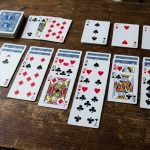
In a culture defined by constant urgency, relentless headlines, and sensory overload, the simple act of shuffling a deck of cards feels almost revolutionary. Every single day, millions of mature adults, remote professionals, and everyday thinkers sit down with a cup of coffee to play aarp games solitaire. This five-minute encounter with 52 playing cards is far more than an idle pastime. Psychologists, neurologists, and mindfulness researchers increasingly view classic solitaire as one of the most effective, accessible tools for emotional de-escalation, spatial memory retention, and mindful calm.
The Psychology of Bringing Order Out of Chaos
Human beings possess an innate psychological need for structure and agency. Much of modern daily life feels stubbornly beyond our personal control: economic shifts, family crises, traffic jams, and global news create constant low-grade cognitive tension.
When you deal a hand of Solitaire, the universe contracts to a fair, manageable scale. You are presented with a state of visible disorder—seven mixed columns and a face-down stock. Yet the rules of engagement are transparent, absolute, and dependable. As you systematically sort red onto black, uncover hidden cards, and march completed suits up to the foundations, your brain experiences a therapeutic sense of micro-mastery. You have taken a disordered system and brought it into pristine harmony through your own deliberate agency.
Inducing the Gentle ‘Alpha State’
Neurologists studying brainwave patterns have discovered that casual solo games like Solitaire induce a shift from anxious beta waves to relaxed alpha waves. Alpha brainwave states (typically oscillating between 8 and 12 Hz) are associated with calm alertness, relaxed focus, and reduced anxiety—the same mental state achieved during gentle walking in nature or light mindfulness meditation.
Because the game requires attention without frantic urgency, it acts as a mental palate cleanser. It engages the prefrontal cortex just enough to push aside ruminating worries and stressful thoughts, while avoiding the frustration or cognitive exhaustion of complex work tasks.
Exercising Spatial Working Memory and Cognitive Agility
While Solitaire feels relaxing, it is simultaneously an active workout for essential cognitive faculties. Each turn engages your spatial working memory—your brain’s ability to hold visual layouts in mental suspension while testing alternative outcomes.
You remember that a red Jack was exposed three cards back in the waste pile, map how moving a black 10 will uncover a buried card in Column 5, and calculate whether you have an available King to occupy an empty slot. Studies from cognitive health institutions confirm that regular engagement with structured card games stimulates neuroplasticity, reinforcing the neural pathways that support memory recall, visual-spatial reasoning, and mental agility throughout mature adulthood.
Creating a Restorative Daily Ritual
To transform your daily card game into an intentional self-care practice, consider these gentle guidelines:
- Pair with a Mindful Beverage: Make your card game the dedicated companion to your morning coffee or evening herbal tea. Protect this five-minute window as a sacred space of personal recharge.
- Resist the Urge to Rush: Ignore the timer. Savor the visual rhythms of the cards and the quiet satisfaction of finding an unexpected sequence.
- Accept Unsolvable Deals with Grace: In classic Solitaire, approximately 18% of random deals are mathematically impossible to win. Treat an unplayable game not as a failure, but as a gentle lesson in acceptance and resilience. Simply gather the cards, reshuffle, and begin anew.
Frequently Asked Questions
Why is AARP Games Solitaire so widely trusted by players?
AARP Games delivers clean, elegant, high-contrast digital card games free of aggressive pop-up advertisements, intrusive timers, and distracting clutter, creating a genuinely tranquil play space.
Can playing Solitaire help seniors maintain mental sharpness?
Yes. Regular card play actively exercises short-term working memory, visual-spatial deduction, and decision-making, helping build cognitive reserve against age-related memory decline.
How many games of Solitaire should I play daily for mental wellness?
Even two or three games (roughly 10 to 15 minutes of focused play) provide a restorative mental reset that calms stress and gently awakens cognitive functions.
Give yourself the peaceful, satisfying mental break you deserve today. Shuffle the virtual cards and enjoy a calm, beautifully crafted deal of aarp games solitaire on aarp-games-solitaire.com right now!